
The Opening Question
You're Doing Everything Right. So Why Does Something Still Feel Off?
You're eating well. You're sleeping. You exercise more consistently than most people half your age. You've tried the supplements, tracked the biomarkers, and built the routines.
And yet — something has quietly shifted. Recovery takes a day longer than it used to. That sharp, effortless energy you remember from your thirties has been replaced by something that requires more maintenance, more effort, more recovery time.
Most people assume this is just aging. That the body is simply declining — a slow, inevitable fade. But researchers studying cellular biology are arriving at a different conclusion. The energy shift most people notice in their forties and fifties isn't primarily about fitness, sleep quality, or lifestyle habits.
It's happening at a deeper level entirely.

Staying active is part of the equation. Researchers are finding the other part happens at the cellular level.
"One thing most people don't realize is that the decline in cellular energy isn't uniform. It begins at the molecular level — often a decade before people notice anything outwardly."
— Cellular Age Well Editorial Research SummaryWhat scientists have been quietly studying for the past two decades points toward a specific molecule — one that sits at the very center of how your cells produce, manage, and sustain energy.
Understanding it changes how you think about aging entirely.
Why This Matters Now
The Molecule at the Center of Cellular Energy Research
Inside every cell in your body, there is a process happening billions of times per second — a process that converts nutrients into usable energy. It's called cellular respiration, and it depends entirely on a molecule called NAD+: Nicotinamide Adenine Dinucleotide.
NAD+ is not a supplement trend. It is a fundamental co-enzyme — meaning cells cannot perform basic energy metabolism without it. It participates in over 500 enzymatic reactions and plays a critical role in DNA repair, circadian rhythm regulation, and a class of longevity-linked proteins called sirtuins.
Researchers have studied its role in aging for decades. And what they've consistently observed is straightforward: NAD+ levels decline significantly with age.
What happens when NAD+ levels drop? Cells become less efficient at energy production. DNA repair slows. The feedback systems that regulate sleep, metabolism, and recovery begin to lag. The result, researchers have observed, resembles exactly what most people describe as "getting older."

Researchers have observed that afternoon cognitive fatigue in adults 40–60 often correlates with declining cellular energy availability.
Many consumers are surprised to learn that NAD+ research isn't fringe science. It sits at the intersection of some of the most well-funded longevity research in the world — studied at institutions ranging from Harvard Medical School to the National Institute on Aging.
What Does NAD+ Actually Do?
NAD+ functions as a biological electron carrier — it shuttles energy within the cell's mitochondria, enabling ATP production. It also activates sirtuins (proteins associated with cellular stress response and lifespan regulation) and supports PARP enzymes responsible for DNA damage repair. When NAD+ levels decline, all of these functions are compromised simultaneously.
The Aging Timeline
What Actually Happens Inside Your Cells After 40
Scientists have observed a fairly consistent pattern across the research on cellular aging. It doesn't happen all at once. It's a gradual cascade — and for most people, it begins well before they feel it.
In your late 30s and early 40s, NAD+ levels begin declining noticeably. Mitochondrial efficiency starts to reduce. Recovery from physical or mental exertion takes incrementally longer. Many people notice subtle changes in sleep quality around this time — waking slightly less restored, even after adequate hours.
By the mid-40s and into the 50s, the decline accelerates. Cellular repair mechanisms that once operated quietly in the background now require more resources and time. The result is compounding: reduced energy availability, slower tissue repair, less efficient metabolic function — all happening simultaneously.
What's striking, researchers have observed, is how closely this cellular timeline maps to what people describe when they talk about "feeling their age." The fatigue that doesn't fully resolve. The recovery window that keeps extending. The sense that peak performance requires more input than it used to return.
This isn't a coincidence. It's cellular biology.
The Core Challenge
Here's Where Things Get Interesting — And Where Most People Get It Wrong
Interest in NAD+ has increased significantly over the past decade. As the research has grown more mainstream, the consumer market has responded with a wave of oral supplements, capsules, powders, and more recently, IV therapy clinics.
But scientists studying bioavailability — the question of how much of a compound actually reaches the cells that need it — have been asking a more fundamental question: does the delivery method actually work?

IV therapy — effective, but clinic-dependent and time-intensive.

Oral supplements face absorption challenges before reaching target cells.
The Oral Supplement Problem
Oral NAD+ precursors face a significant challenge: the gastrointestinal tract. Before reaching systemic circulation, supplements must survive the digestive process, liver metabolism, and first-pass effects. Many researchers have observed that oral bioavailability for NAD+ precursors varies considerably — and that a meaningful portion of an oral dose may be metabolized before it reaches target tissues.
The IV Therapy Tradeoff
Intravenous NAD+ delivers the compound directly into the bloodstream, bypassing the digestive system entirely. But it creates its own set of constraints: clinical appointments, high costs per session, significant time commitments, and delivery profiles that spike sharply and then drop — rather than providing the steady, sustained cellular availability that researchers consider optimal for metabolic support.

For frequent travelers and high-output professionals, clinic-dependent protocols create scheduling friction that compounds over time.
The Delivery Question
What researchers and clinicians have increasingly observed is that for compounds like NAD+, the mechanism of delivery matters as much as the compound itself. Consistency, absorption, and steady-state availability appear to be key variables — and they're exactly what conventional delivery formats struggle to provide.
"The delivery mechanism isn't a footnote. For compounds with variable bioavailability, it may be the single most important variable in whether someone actually benefits."
— Emerging Research on Transdermal Delivery Systems, 2024 SummaryThis is where an emerging approach has been attracting growing attention from both researchers and performance-focused individuals who've exhausted other options.
Side-by-Side Comparison
How Different NAD+ Approaches Stack Up
Many consumers are surprised to learn how much delivery method varies across different NAD+ formats. Here's what the research and user experience suggest about each approach:
| Variable | Oral Supplements | IV Therapy | Injections | Iontophoresis Patch |
|---|---|---|---|---|
| Absorption consistency | △ Variable | ✓ High | △ Inconsistent | ✓ Controlled |
| Delivery profile | Peaks & drops | Sharp spike, rapid drop | Inconsistent | Sustained release |
| Requires clinic visit | ✓ No | ✗ Yes | ✗ Often yes | ✓ At-home |
| Needle-free | ✓ Yes | ✗ No | ✗ No | ✓ Yes |
| Cost per session | Low | $150–$400+ | $80–$200+ | Subscription model |
| Structured protocol | ✗ No | △ Clinic-guided | ✗ No | ✓ Yes |
| Bypasses digestion | ✗ No | ✓ Yes | ✓ Yes | ✓ Yes |
Note: Comparison reflects general research and user experience across delivery categories. Individual results vary. This is not medical advice.
Introducing
One Company Approaching This Differently
Most people searching for real NAD+ support eventually encounter the same frustrating cycle: supplements that underdeliver, clinics that are inconvenient, protocols that require guesswork. BioSource Health has been building a more structured approach.
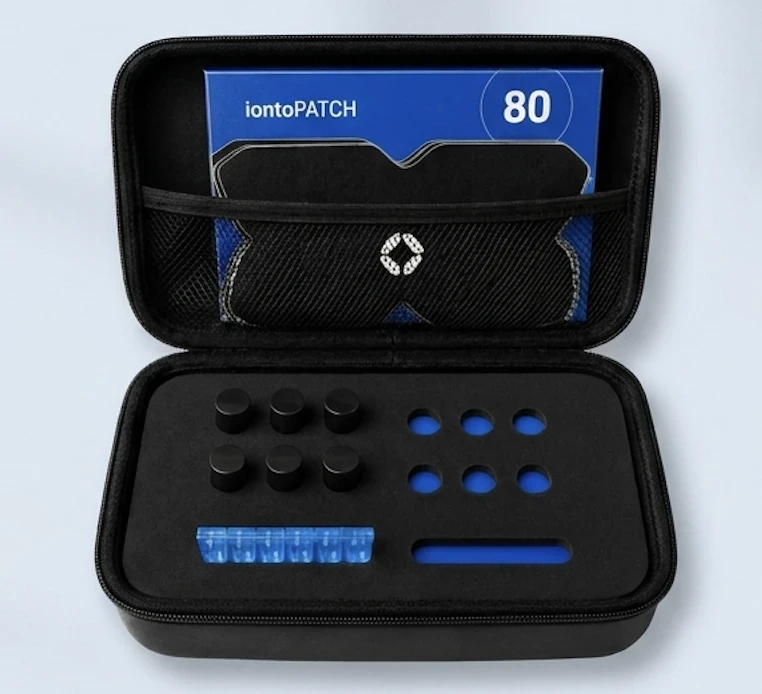
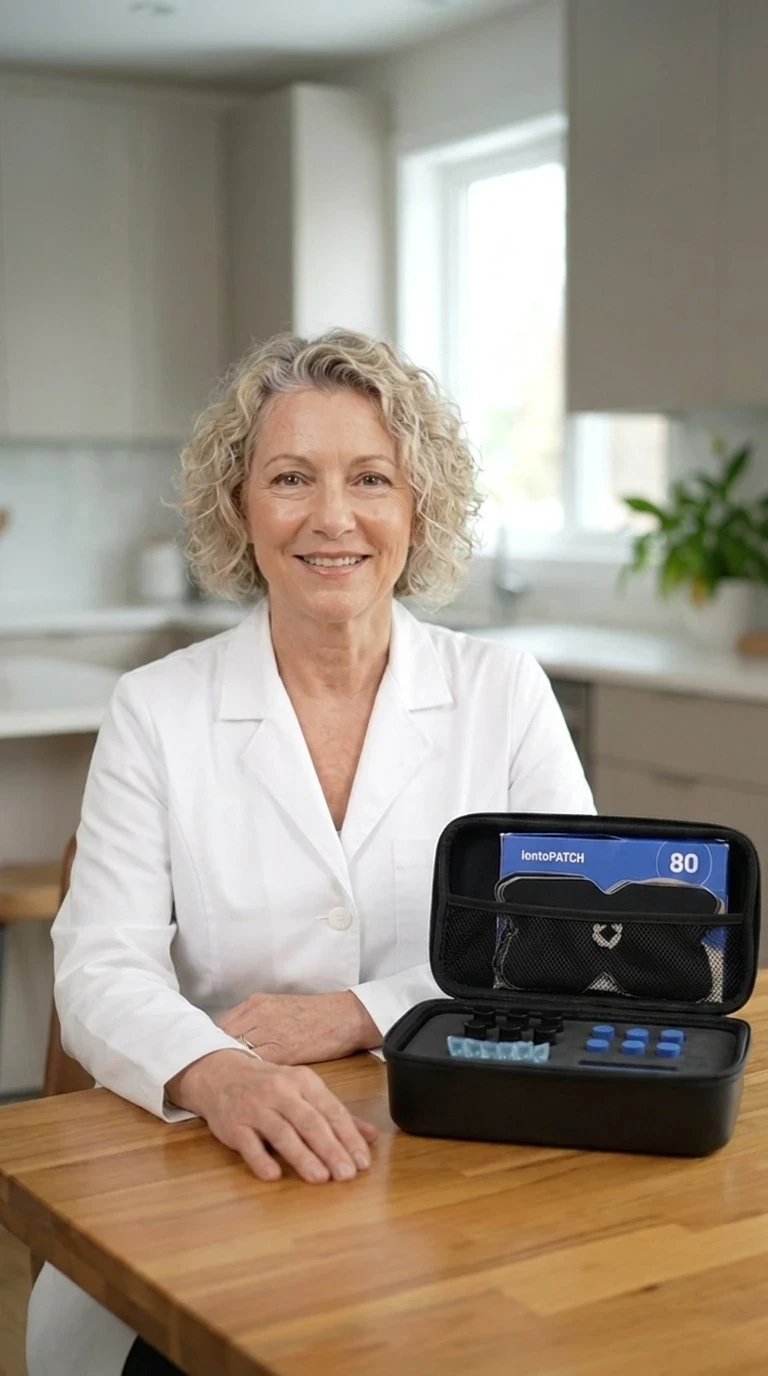
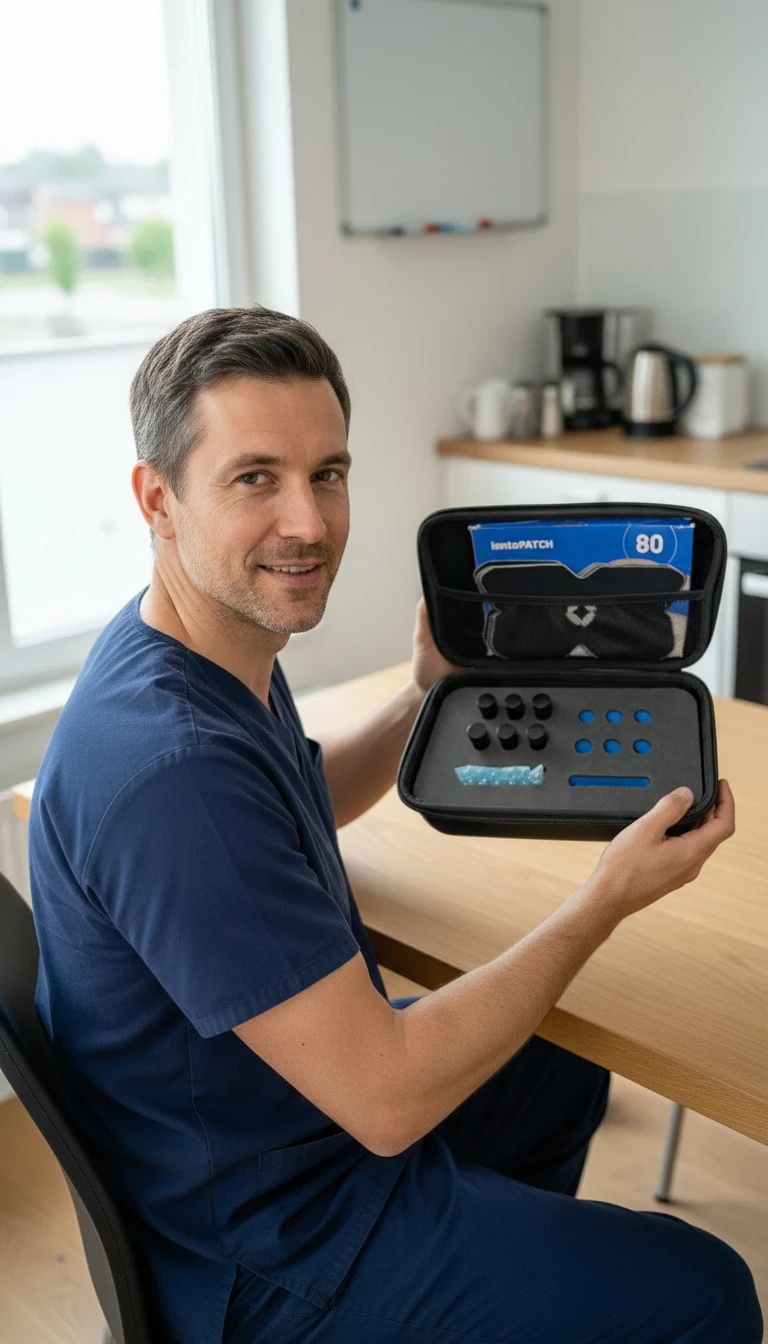
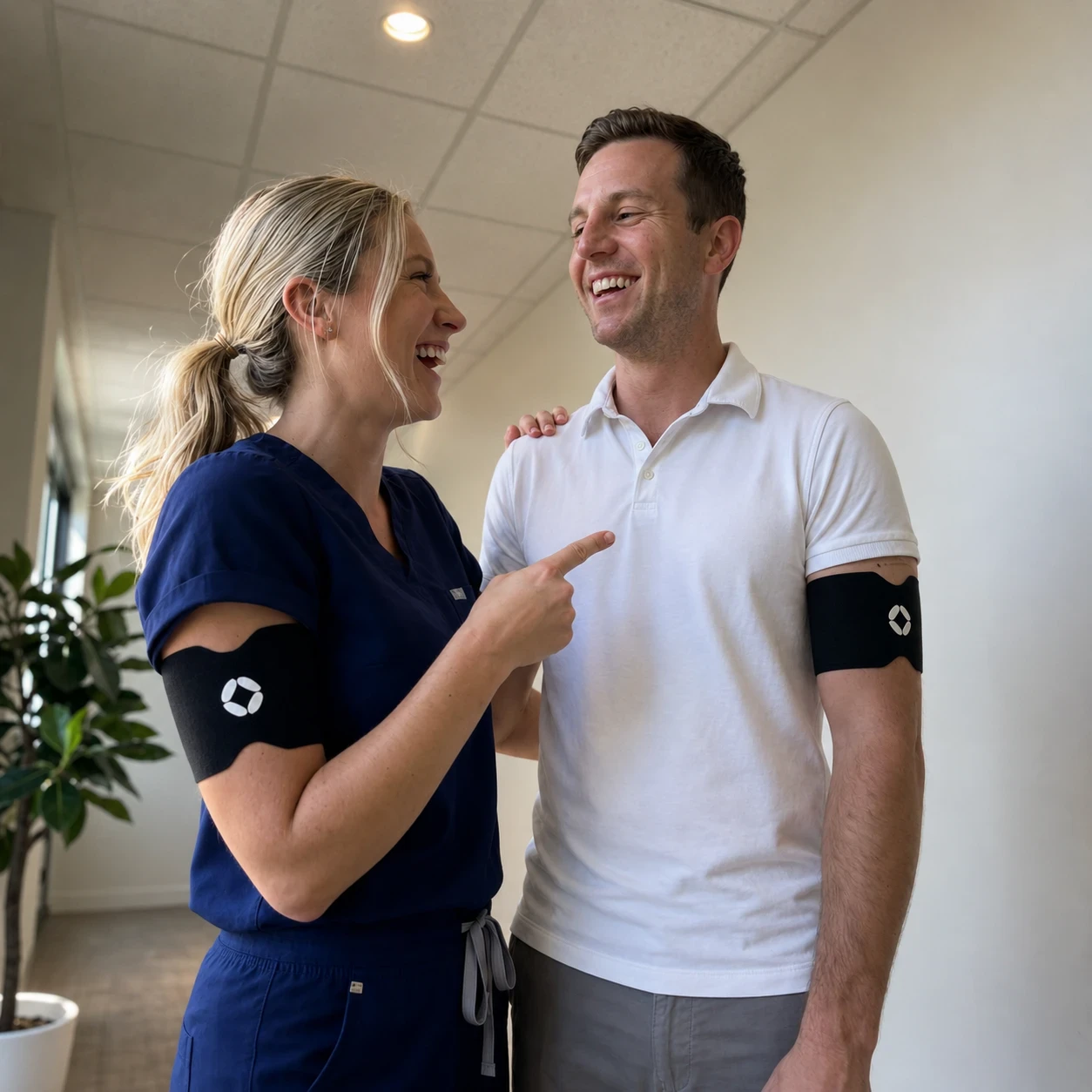
BioSource Health has developed an at-home NAD+ delivery system built around iontophoresis — a technology that uses a low-level electrical current to drive compounds through the skin and into systemic circulation. No needles. No clinic visits. No guesswork about absorption.
Monthly protocol · Subscription available · Ships to US, CA, UK, AU
A Closer Look
What Makes Iontophoresis Different from a Standard Patch
Standard transdermal patches — think nicotine patches or hormone patches — rely on passive diffusion: the compound slowly migrates through the skin based on concentration gradients. For larger, more complex molecules like NAD+, passive diffusion has significant limitations.
Iontophoresis changes the physics of the equation. By applying a small, controlled electrical current, the technology actively drives ionized compounds through the skin's outer layers and into the dermis, where they can enter systemic circulation. Scientists have observed meaningfully higher delivery rates for charged molecules using this approach compared to passive methods.
The result is a delivery profile that more closely resembles IV therapy in consistency — without the clinic, the needle, or the sharp spike-and-crash pharmacokinetics that make IV protocols difficult to sustain over time.
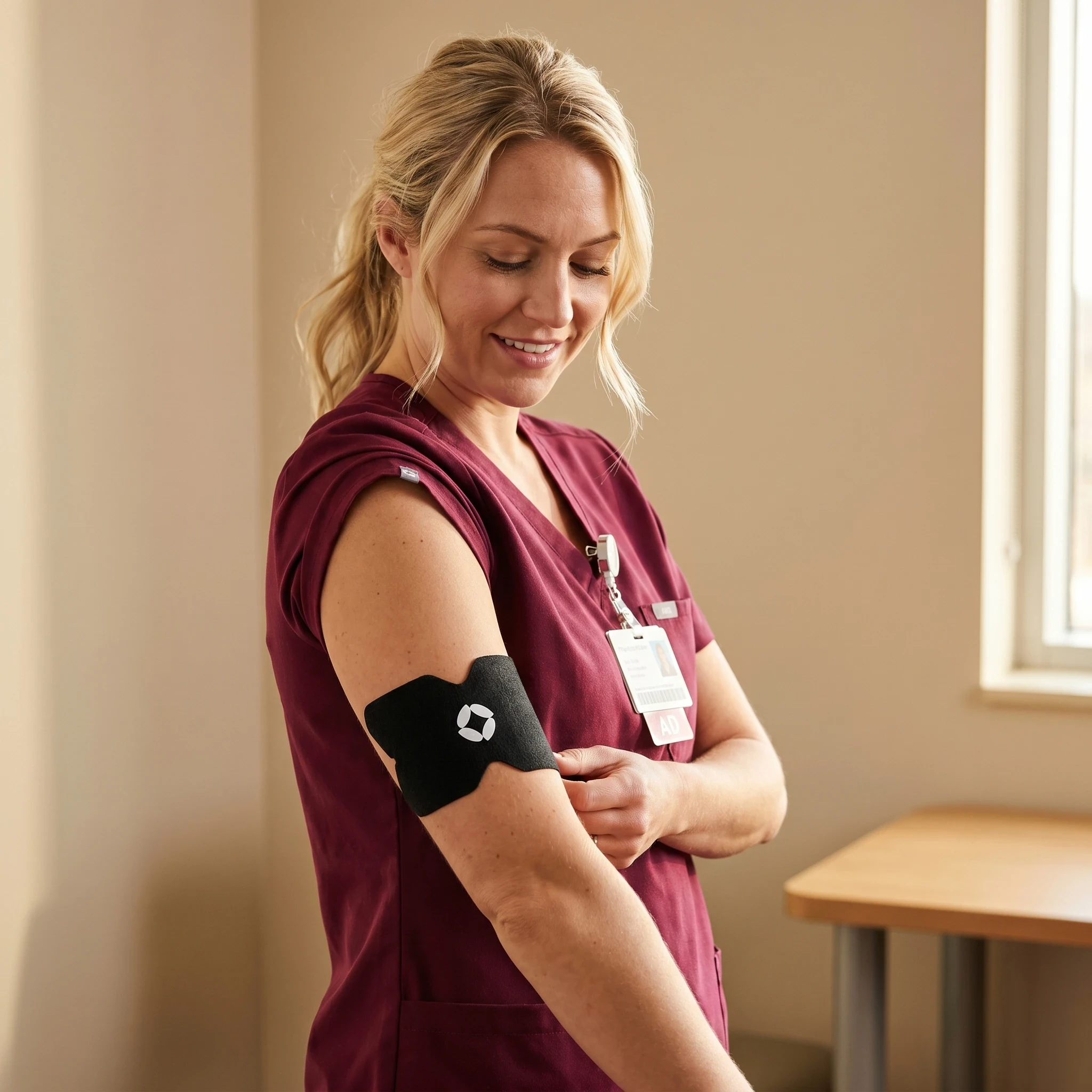
The at-home protocol is designed to fit into existing routines — no appointments, no adjustments to your schedule.
What BioSource Health has done is package this technology into a structured at-home protocol — designed not as a one-time experiment, but as a system that can be used consistently over weeks and months. That consistency, researchers have observed, is critical: the cellular energy systems that NAD+ supports respond most meaningfully to sustained, reliable availability over time.
"I spent two years doing IV NAD+ therapy. Same results, fraction of the hassle. I don't miss the appointments at all. The patch fits into my morning routine without thinking about it."
"I'm pretty skeptical by nature — I read everything before trying anything. The science behind iontophoresis delivery is solid. What I wasn't expecting was how quickly I noticed a difference in my afternoon energy."
"I hate needles. Full stop. I'd been avoiding NAD+ therapy for years because of that. This was the first format that removed that barrier entirely. I'm on month four now."
"The structured protocol was what sold me. I don't want to guess about timing, dosage, or whether what I'm doing is consistent. Having it mapped out month by month makes the whole thing feel real."
Common Questions
What People Want to Know Before Starting
No Needles. No Clinics.
Just a Real Protocol.
If you've been searching for a more consistent, more convenient approach to NAD+ support — one built around actual delivery science rather than marketing claims — the BioSource Health protocol is worth a serious look.
Explore the High-Dose NAD+ Protocol →Monthly subscription · Cancel anytime · Ships to US, CA, UK, AU